Bridge the Gap Between People, Information and Technology

Join a Top-6 Ranked School of Information Studies3

Libraries play a pivotal role in our communities—providing a range of services that promote equity and literacy, and a safe space for learning and inspiration.

The online Master of Science in Library and Information Science (MSLIS) program from Syracuse University’s iSchool prepares you to promote the power of information throughout your career. 

You’ll learn to promote equal access to technology, foster digital literacy and help underserved populations. You’ll prepare to become a leader in your organization. And you’ll change how people and organizations use libraries and information resources for the better.

Best Library and Information Studies Program

Offered online since 2017, our MSLIS program has been accredited by the American Library Association (ALA) since 1928. 4

Jump to:

Curriculum

Admissions

Faculty

Careers

FAQs

Request Information

A Curriculum Designed for Modern Information Leadership

The online MSLIS includes 36 credit hours and can be completed in as few as 18 months. The program is designed to be completed fully online, with no required immersions, residencies or campus visits. View our online curriculum here

Students must complete:

  • Primary coursework (15 credits): Build your foundation in the knowledge, skills and values of the library information profession.
  • Electives (18 credits): Expand on your core knowledge and take courses—or choose a professional pathway—that align with your career goals.
  • Exit requirement (3 credits): Crystallize your knowledge by reflecting on your body of work and making connections between coursework and experiences.

Students can customize their studies through professional pathways and certificate options focused on emerging areas of information science.

Professional Pathways

Six professional pathways allow you to tailor your studies to your career goals and interests. Students may focus their coursework in one of the following areas:

  • User Services and Community Engagement
  • Data Curation and Services
  • Organization and Management of Information and Knowledge
  • Children and Youth Services
  • Digital Information Systems
  • Information Research and Analytics

Learn more about each pathway on our Professional Pathways page.

Explore the School Media Specialization

Students interested in K-12 librarianship and school media may pursue the School Media specialization within the MSLIS curriculum. This specialization prepares students to support digital and traditional literacy through multimedia tools, instructional technology and school library services.

Already Have an MLIS? Consider the CAS in School Media

You can also earn a Certificate of Advanced Study (CAS) in Library Media. The CAS in School Media is a 21-credit certificate program for those who already possess an accredited master’s degree in library and information science and want certification as a school library media specialist.

Course Highlights

Information Organization

Develop skills in metadata, classification systems and information retrieval methods used in libraries, archives and digital repositories.

Digital Libraries

Explore digital collection management, preservation strategies and online information access systems for modern library environments.

User Experience for Information Systems

Learn usability research, information architecture and human-centered design principles to improve digital information experiences.

Accelerated vs. Standard Completion Options

TrackTimelineBest for those who
Accelerated
18 months
Students who can commit to a higher per-term course load
Standard
24 months
Working professionals who need a flexible pace

What Are the Admission Requirements for Syracuse’s Online MSLIS?

We offer four annual start dates—January, April, July and October—and rolling admissions, so you can apply and receive an admissions decision on your schedule. You must hold a bachelor’s degree from a regionally accredited institution to apply. 

Your submission should include the following:

  • Online application
  • Resume
  • Official transcripts
  • Two letters of recommendation
  • Personal statement

GRE scores are not required; however, you may submit them if you feel they will strengthen your application. We also require a nonrefundable application fee of $75. If you apply before the priority deadline for your preferred start date, your application fee will be reduced to $45. 

Application fee waivers are available for:

  • active-duty service members and veterans;
  • current Syracuse University undergraduate and graduate students; and
  • Syracuse University alumni and employees.

Review our application requirements and connect with our enrollment team to learn more.

Tuition and Financial Aid

Tuition ComponentEstimated Tuition Cost (2025-2026 Academic Year)
Cost Per Credit
$2,086
Total Credits
36
Estimated Tuition
$75,096

Additional university and technology fees may apply. Tuition rates are subject to change. Syracuse University also offers scholarships, fellowships and financial aid opportunities for eligible students.

Learn more about tuition and financial aid.

Learn From Faculty and Industry Leaders

Faculty Spotlight

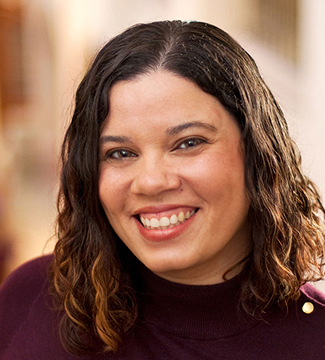
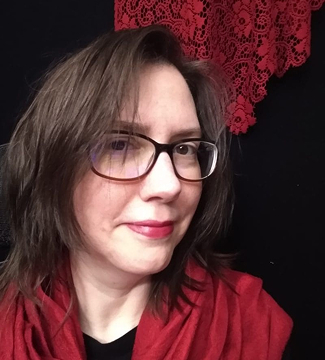
Dr. Beth Patin

Dr. Beth Patin’s teaching and research focus on community engagement, social justice, information access and the role of libraries in supporting underserved populations. Her work explores how libraries can foster inclusion, civic participation and equitable access to information.

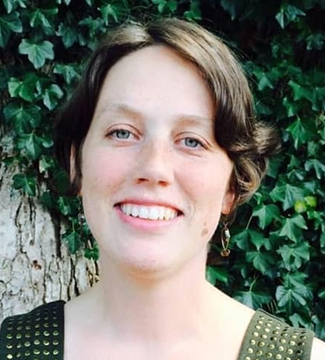
Dr. Poppy R. Louthan

Dr. Poppy R. Louthan teaches courses in school librarianship, youth services and literacy-focused information education. Her work centers on inclusive learning, digital literacy and supporting students through community-focused library instruction.

Arden Kirkland

Arden Kirkland is an adjunct professor and digital librarian whose work focuses on digital collections, metadata, online learning and digital curation. She teaches courses related to information organization, instructional design and digital access in modern information environments.

Explore the full Syracuse iSchool faculty directory.

What Careers Can You Pursue With a Syracuse MSLIS?

Online MSLIS graduates pursue careers across libraries, education, archives, research institutions, government agencies and technology-focused organizations.

Recent Graduate Outcomes5

2025 Career OutcomesResult
Graduate Placement Rate
98%
Five-Year Rolling Average Placement Rate
96%
Employed After Graduation
94%

Time to Employment (2025 Graduates)Percentage
Employed Before Graduation
69%
Employed Within 0–3 Months
9%
Employed Within 3–6 Months
9%
Employed After 6+ Months
3%

Our graduates are thriving in a wide range of library science careers across the country. Recent graduates have secured roles like:

  • Emerging technologies librarian
  • Library manager
  • Open education librarian
  • Archives assistant
  • Teen/young adult librarian

Employers include the New York Public Library, Brooklyn Public Library, Cornell University and Northwestern University.

Career Support

To support students as they prepare for these opportunities, Syracuse University provides access to a Virtual Career Center, personalized career coaching and professional development resources designed to help graduates navigate a rapidly evolving information landscape.

Visit our career services page to learn more.

Library and Information Science Career Paths

Career PathMedian Annual SalaryCommon Work Settings
Librarian and Library Media Specialist
$64,3206
Public libraries, schools, universities
Archivist
$57,1007
Museums, government agencies, research institutions
Curator
$57,1008
Museums, cultural institutions
Information Specialist
Varies by industry and sector
Corporate, nonprofit and government organizations
Digital Asset Manager
Varies by organization and experience
Media, technology and enterprise organizations

According to the U.S. Bureau of Labor Statistics, employment for librarians and library media specialists is projected to grow through 2034 as organizations continue adapting to digital information management and community learning needs.9

Start Your MSLIS Journey

Earn your MSLIS online in as few as 18 months and make a difference in your community or organization.

Request Information Today

Jump to:

Curriculum

Admissions

Faculty

Careers

FAQs

Request Information

Back to Top

Receive Personalized Support Through Our iSchool Community

No matter where you live, you’ll have the support of our community of expert faculty, passionate students and hardworking alumni that include academic librarians, data scientists, archivists and school media specialists.

This dedicated community support comes in the form of one-on-one sessions with professors, internship opportunities that give you hands-on work experience in the field and access to networking events with connections to our worldwide iSchool alumni network.

“Before I applied for the Syracuse LIS program, I had reached my ceiling at my job with the level of education I previously had. But even before I’ve graduated, I have been able to leverage my experience and the new insight I learned through the program into a professional librarian position.”

Nick A.

MSLIS Program, Research Librarian,
Henderson County Public Library

Visit our student and alumni page to read more stories about our Orange community.

Explore How an MSLIS Degree Can Propel Your Career

Earn your master’s degree in library science online from Syracuse University.

FAQs About the Online Master of Science in Library and Information Science at Syracuse University

  • Yes. Syracuse University offers a 100% online Master of Science in Library and Information Science (MSLIS) designed for students who need the flexibility to study from their own communities. While the delivery is digital, the curriculum and graduation requirements are identical to the on-campus program, requiring the same level of self-discipline and academic rigor.

  • Yes. Syracuse University’s MSLIS has been continuously accredited by the American Library Association (ALA) since 1928. ALA accreditation is considered the standard credential for professional library and information science roles in the United States.

  • MLS (Master of Library Science) and MLIS (Master of Library and Information Science) degrees are very similar and are generally considered equivalent by employers. Both prepare students for careers in libraries, archives and other information-focused settings.

    The main difference is often one of emphasis. While traditional MLS programs may focus more heavily on library operations and services, MLIS and MSLIS programs typically place additional emphasis on information systems, digital technologies, data management and user experience alongside core library science principles.

    Syracuse University’s MSLIS reflects this broader approach, preparing graduates for roles in both traditional library settings and the wider information profession.

  • Applicants must hold a bachelor’s degree from an accredited institution. Required application materials include:

    • Resume or CV
    • Personal statement
    • Two letters of recommendation
    • Official transcripts

    GRE scores are not required for admission.

  • 18 to 24 months. The online Syracuse Master of Science in Library and Information Science program requires 36 credits and can be completed on an accelerated track in as few as 18 months, or via a standard track over 24 months.

  • $2,086 per credit hour. For the 2026–2027 academic year, tuition for the 36-credit Syracuse University online MSLIS totals an estimated $75,096. Additional institutional fees apply. Visit the Tuition and Financial Aid page for the most current tuition information.

  • Yes. Beyond standard federal financial aid, we encourage students to explore Graduate Assistantships (GAs) or employer-sponsored tuition reimbursement, which is common in many large public and academic library systems.

  • For many students, an MSLIS is worth pursuing if they are passionate about connecting people with information, advancing literacy, preserving knowledge and improving access to information resources. The degree can also open doors to careers in libraries, archives, education, research, digital information management and technology-focused information roles.

    When evaluating programs, it is important to consider factors such as accreditation, graduate outcomes, industry reputation and curriculum relevance. Syracuse University’s ALA-accredited MSLIS combines library science, information management, leadership and technology skills designed to prepare graduates for a rapidly evolving information landscape.

  • Yes, it matters. While accreditation is the most important factor, a degree from a top-tier research university like Syracuse provides a distinct advantage through faculty networking and specialized career tracks. Our reputation is particularly strong for those pursuing the School Media track.

  • The Syracuse Online MSLIS program offers six optional professional pathways: User Services and Community Engagement, Data Curation and Services, Organization and Management of Information and Knowledge, Children and Youth Services, Digital Information Systems, and Information Research and Analytics.

    These pathways serve as recommended areas of focus, allowing students to tailor their coursework to their professional interests and career goals, but students are not required to select a pathway.

    The program also offers a separate School Media Specialization for students who want to prepare for careers in school librarianship. Because the specialization has its own curriculum requirements, prospective students should review the program requirements to determine whether it aligns with their career goals.

  • It is essential. The field is highly competitive, and employers often value professional experience as much as the degree itself. We strongly encourage students to seek paid or volunteer roles in libraries during their studies to apply the theoretical knowledge they gain in class.

  • A Master of Science in Library and Information Science prepares you for traditional roles—such as a librarian or archivist—as well as modern tech roles, like a digital asset manager or user experience researcher. Graduates find success across various sectors including public libraries, universities, corporate legal departments and government agencies.

  • Yes. While the field is evolving, job growth for librarians is expected to grow 2% between 2024 and 2034, according to the BLS.10 The demand is shifting toward professionals who can manage digital information, community education, and technological adaptation.

  • No. Instead, AI is being used as a tool to automate routine tasks, allowing librarians to focus on high-level strategy and ethical information implementation. A Syracuse education focuses on helping you navigate these technological shifts rather than being replaced by them.

  1. ALA Accredited Programs. (2026). American Library Association. Retrieved July 16, 2026. ↩︎
  2. Best Library and Information Studies Programs. (2025). U.S. News & World Report. Retrieved July 16, 2026. ↩︎
  3. Best Library and Information Studies Programs. (2025). U.S. News & World Report. Retrieved July 16, 2026. ↩︎
  4. ALA Accredited Programs. (2026). American Library Association. Retrieved July 16, 2026. ↩︎
  5. Library and Information Science Student Achievement Data. (2026). Syracuse University. Retrieved July 16, 2026. ↩︎
  6. Librarians and Library Media Specialists. (2025). U.S. Bureau of Labor Statistics. Retrieved July 16, 2026. ↩︎
  7. Archivists, Curators, and Museum Workers. (2025). U.S. Bureau of Labor Statistics. Retrieved July 16, 2026. ↩︎
  8.  Curators, Museum Technicians, and Conservators. (2025). U.S. Bureau of Labor Statistics. Retrieved July 16, 2026. ↩︎
  9. Librarians and Library Media Specialists — Work Environment. (2025). U.S. Bureau of Labor Statistics. Retrieved July 16, 2026. ↩︎
  10. Librarians and Library Media Specialists — Work Environment. (2025). U.S. Bureau of Labor Statistics. Retrieved July 16, 2026. ↩︎